
Updated October 29, 2026
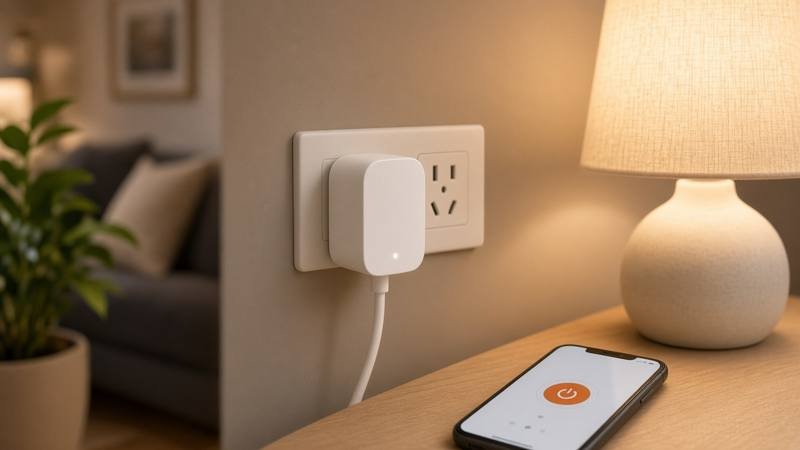
Smart plugs are the easiest on-ramp to a smarter home. You do not rewire a switch or replace every lamp—you add a small adapter, connect it to Wi‑Fi (or Matter), and that fan, string lights, or coffee maker answers to your phone or voice assistant.
If you want the best smart plugs for beginners, prioritize a clear app, honest Alexa/Google/Apple support, UL/ETL safety marks, and a price low enough that a first mistake does not sting. Below are five real Amazon-available picks for 2026, plus a plain-English look at Matter/Thread vs Wi‑Fi.
Quick picks
*Street prices move often on Amazon. Always check current Amazon price before you buy.
Compare at a glance
| Award | Model | Best for | Approx. price* | Shop |
|---|---|---|---|---|
| Best overall beginner | Kasa KP125M (Matter) | Most first-timers who want future-proof control | ~$35–$45 (2-pack) | Check price |
| Best budget multipack | Kasa HS103P4 | Several lamps on a tight budget | ~$27–$35 (4-pack) | Check price |
| Best for Alexa | Amazon Smart Plug | Echo-only homes, zero extra apps | ~$13–$25 (often ~$13–$15 on sale) | Check price |
| Best outdoor | Tapo P400M / TP25 | Patio lights and holiday displays | ~$25–$35 | Check price |
| Best energy monitoring | Eve Energy (Matter) | Apple Home / Thread homes | ~$35–$45 each | Check price |
*Approximate prices change often, especially around Black Friday and Cyber Monday. Check Amazon for the current price.
How we chose
Picks draw on 2025–2026 roundups and testing (including Wirecutter’s smart-plug guide) plus manufacturer specs—not invented models. For beginners we weighted:
- Setup friction — App clarity, Matter QR / Bluetooth onboarding, hub requirements.
- Assistant match — Alexa, Google Home, and Apple Home support (or clear Alexa-only limits).
- Safety — Prefer UL/ETL; typical 15A / ~1,800W class for lamps and fans—not space heaters unless allowed.
- Form factor — Slim plugs that do not block the neighboring outlet.
- Future-proofing — Matter for mixed ecosystems; real outdoor weather ratings when needed.
- Amazon US value — Approximate ranges only; always check current Amazon price.
Matter, Thread, and Wi‑Fi (beginner version)
Wi‑Fi plugs (most Kasa, Amazon, Wyze) use your 2.4 GHz network and a cloud app. Cheap and easy; some features pause if the internet drops.
Matter is a shared standard from Apple, Amazon, Google, and others. A Matter plug can join Apple Home, Alexa, Google Home, or SmartThings via QR—often without locking you to one brand forever. Many Matter plugs still use Wi‑Fi (Kasa KP125M, Tapo P400M). You usually need a Matter controller (recent Echo, Nest Hub, HomePod, etc.).
Thread is a low-power mesh. Eve Energy uses Matter over Thread and needs a Thread border router. Snappy and local-friendly—but unnecessary if you only want to schedule a lamp.
Rule of thumb: Alexa-only → Amazon Smart Plug. Mixed or undecided → Matter Kasa/Tapo. Apple + Thread already in the house → Eve. Skip Zigbee/Z-Wave unless you already own that hub.
Best overall beginner: Kasa KP125M Matter Smart Plug
Who it’s for: First-time buyers who want Alexa, Google, and Apple Home options—and like seeing watt draw.
The Kasa KP125M is the safest all-around starter in 2026. Matter-certified commissioning works from Alexa, Google Home, or Apple Home; the Kasa app adds real-time and historical energy monitoring (watts, kWh, estimated cost if you enter your rate). The slim body is built so two plugs can share a duplex outlet.
Rated 15A / 1,800W, with schedules, timers, and voice control. Bluetooth or Matter QR setup is beginner-friendly. UL certification and TP-Link’s limited warranty add peace of mind.
Key specs: Wi‑Fi 2.4 GHz + Matter; Alexa / Google / Apple via Matter; energy monitoring in Kasa app; ~$35–$45 for a 2-pack (often ~$12–$15 each in larger packs)—check current Amazon price.
Pros: Cross-platform Matter; useful energy graphs; compact; no Thread hub required.
Cons: Detailed energy charts stay mainly in Kasa; sold mostly in multipacks; needs 2.4 GHz Wi‑Fi.
Bottom line: Best default if you want the best smart plugs for beginners without guessing your future assistant.
Best budget multipack: Kasa HS103P4 (4-Pack)
Who it’s for: Renters who need four lamps or fans smart this weekend.
The HS103P4 is the classic multipack starter: Wi‑Fi (no Matter), Alexa + Google Home, schedules in the Kasa app, and years of Amazon reviews. No Apple Home or watt metering—but at roughly $7–$9 per outlet when the pack sits near ~$27–$35, it is hard to beat for on/off automation. UL-listed and reliably boring in the best way.
Key specs: Wi‑Fi 2.4 GHz; Alexa + Google (not Apple Home); no energy monitoring; 4-pack ~$27–$35—check current Amazon price.
Pros: Best price per trustworthy outlet; mature app; easy to expand later.
Cons: No Matter/HomeKit; no power metering; older design vs slim Matter models.
Bottom line: Best way to smartify a whole living room without overthinking protocols.
Best for Alexa: Amazon Smart Plug
Who it’s for: Echo households that do not care about Google or Apple.
The Amazon Smart Plug wins on friction. Open the Alexa app and it usually appears with almost no ceremony—no second brand account for basic use. Routines and grouping feel native. Sale prices often land around $13–$15 (list ~$25). Trade-off: Alexa only, no Matter, no energy monitoring. Leave Amazon later and the plug is a paperweight—fine for Echo-loyal beginners.
Key specs: Wi‑Fi 2.4 GHz; Alexa only; ~$13–$25—check current Amazon price.
Pros: Fastest Echo setup; no extra app for daily use; frequent deep discounts.
Cons: Ecosystem lock-in; weak value at full ~$25 vs a Kasa multipack.
Bottom line: If your smart home is Alexa, buy this first—ideally on sale.
Best outdoor: Tapo P400M / TP25 Outdoor Smart Plug
Who it’s for: Patio lights, holiday inflatables, outdoor GFCI receptacles.
Indoor plugs are not outdoor plugs. The Tapo P400M (Amazon twin of the TP25) is a strong 2026 outdoor pick: IP65 weather resistance, dual independently controlled outlets, Matter for major platforms, and roughly -4°F to 122°F operation. Mount outlet-side down above ground and use a weatherproof outdoor receptacle. Schedules and Away Mode live in the Tapo app; metering is more run-time than precision kWh.
Key specs: Wi‑Fi + Matter; 2 independent outlets; IP65; ~1,800W class (confirm label); ~$25–$35—check current Amazon price.
Pros: Real outdoor rating; two schedules from one brick; Matter for mixed households.
Cons: Not a full kWh meter; Matter wants a controller; bulkier than indoor minis.
Bottom line: Weatherproof dual control without risking a rain-soaked indoor adapter.
Best energy monitoring: Eve Energy (Matter over Thread)
Who it’s for: Buyers who already have a HomePod mini, Apple TV 4K, or other Thread border router—and care what a dehumidifier costs per month.
Eve Energy is the premium energy pick: Matter over Thread, multi-platform support, and a local/privacy-forward design with live watts and cumulative kWh. It also acts as a Thread router node. Cost is higher (~$35–$45 each) and a border router is mandatory. Without Thread gear, use the Kasa KP125M for energy insights instead.
Key specs: Matter over Thread; hub required; 15A / 1,800W class; ~$35–$45 each—check current Amazon price.
Pros: Strong metering; local-first posture; strengthens Thread mesh.
Cons: Highest cost per outlet; not a two-minute first plug; overkill for one bedside lamp.
Bottom line: Best energy upgrade once your beginner setup outgrows basic Wi‑Fi plugs.
Buying guide & setup tips
Match the assistant you already use. Echo-only homes can stay with Amazon. Mixed phones or future HomeKit → prefer Matter (KP125M, Tapo outdoor, Eve).
2.4 GHz Wi‑Fi is required for almost every Wi‑Fi plug. If pairing fails, your phone is probably on 5 GHz—join 2.4 GHz or a dual-band SSID.
Safety: Look for UL/ETL. Stay within amp/watt limits. Never use indoor plugs outdoors. Many makers discourage space heaters, aquariums, and medical devices—read the manual. Outdoor plugs belong on GFCI-protected outdoor receptacles.
When a plug is wrong: Hardwired lights need a smart switch; busy desks may need a smart strip. Climate control is a separate project—see other smart home upgrades on Home Upgrade Atlas, including our smart thermostat guide, when you are ready to go beyond lamps and fans.
Setup checklist: Update phone/hub apps → power the plug → name it clearly (“Living lamp”) → create one routine (e.g., Good night) → test the physical button. For Matter, scan the device QR in your chosen ecosystem first; add the vendor app only if you need energy charts or extras.
FAQ
What are the best smart plugs for beginners in 2026?
For most people, the Kasa KP125M. Budget shoppers should grab the Kasa HS103P4 4-pack. Alexa-only homes can start with the Amazon Smart Plug.
Do I need Matter for a first smart plug?
No. Classic Wi‑Fi plugs still work great. Choose Matter if you use Apple Home, mix assistants, or want easier long-term compatibility.
Will a smart plug work if my internet goes down?
Remote access and most voice features usually need internet. Local behavior varies—assume cloud features pause during outages unless you have verified local control.
Can I use any smart plug outdoors?
No. Use a rated outdoor model such as the Tapo P400M / TP25. Indoor plugs can fail—or become hazardous—in rain and dust.
Are cheap no-name plugs safe?
Prefer UL/ETL-listed plugs from established brands (Kasa/TP-Link, Amazon, Eve, Meross, Wyze). A mystery $5 plug is not worth an electrical risk.
Verdict
Smart plugs are the lowest-stress smart-home win you can finish in an afternoon. Match the plug to your voice assistant, buy certified hardware, and expand after one routine proves useful.
- Kasa KP125M — best overall best smart plugs for beginners pick (Matter + monitoring).
- Kasa HS103P4 — four reliable outlets on a budget.
- Amazon Smart Plug — simplest Alexa-only setup.
- Tapo P400M / TP25 — weatherproof dual outdoor control.
- Eve Energy — Thread energy data when you already have a border router.
Before you buy, check current Amazon price, confirm 2.4 GHz Wi‑Fi, and verify Matter/Thread hub needs on the listing. Start with one lamp you use every day—then let schedules retire the “did I leave that on?” habit.
Ready for the next step after smart plugs? A video doorbell is one of the most useful upgrades before package season. See our best video doorbells guide for Ring, Nest, no-subscription eufy and budget picks.
More buying guides on Home Upgrade Atlas
Browse all guidesRelated buying guides
- Ecobee vs Nest vs Amazon Smart Thermostat (2026) (head-to-head: C-wire, Alexa, Google, Apple Home, sensors and price)
- Best Smart Thermostat Without a C-Wire (2026) (8 picks that work in older homes, plus adapter options)
- Best Christmas Lights (2026) (pair any set with a smart plug for schedules)
- Best Video Doorbells (2026)
- Best Smart Door Locks (2026)
- Best Smart Thermostats (2026)
- Best Air Purifiers for Apartments (2026)
- Best Space Heaters for Bedrooms (2026)
- Best Robot Vacuums for Pet Hair (2026)
- Best Pantry Organizers (2026)